
Heat Pump Installation in Everett, WA
Cold-climate heat pumps, gas furnaces and ductless systems for Everett homes. Free written quotes, permits pulled, and the same person on the quote and on the install.
I install cold-climate heat pumps in Everett — the kind rated to keep making heat below zero. One system heats the house all winter and cools it all summer. I quote the job and I install the job. Same person, both times.
ExactAir Home Comfort is one person: me, Rylan Utter. There is no commissioned salesman between you and the price, and nobody hands your job off to whoever happens to be free that week. Everett is my home city, and most of the work I do here still comes from somebody I have already worked for sending me down the street.
What a heat pump costs in Everett — how pricing works
I do not put prices on a webpage, because your house sets the number. I walk the house, run the load calculation, and give you a free written quote with good, better and best options side by side. These are the systems I install most:
- American Standard 2-ton heat pump, side discharge, multi-stage
- Free written quote after a site visit
- Ameristar 80,000 BTU 80% gas furnace, like-for-like replacement
- Free written quote after a site visit
- A/C coil added during a furnace install (makes the system heat-pump ready)
- Free written quote after a site visit
- Mechanical permit
- Free written quote after a site visit
- Honeywell S1200 smart thermostat
- Free written quote after a site visit
- Ecobee Smart Thermostat Premium
- Free written quote after a site visit
- Air Scrubber UV whole-home purification
- Free written quote after a site visit
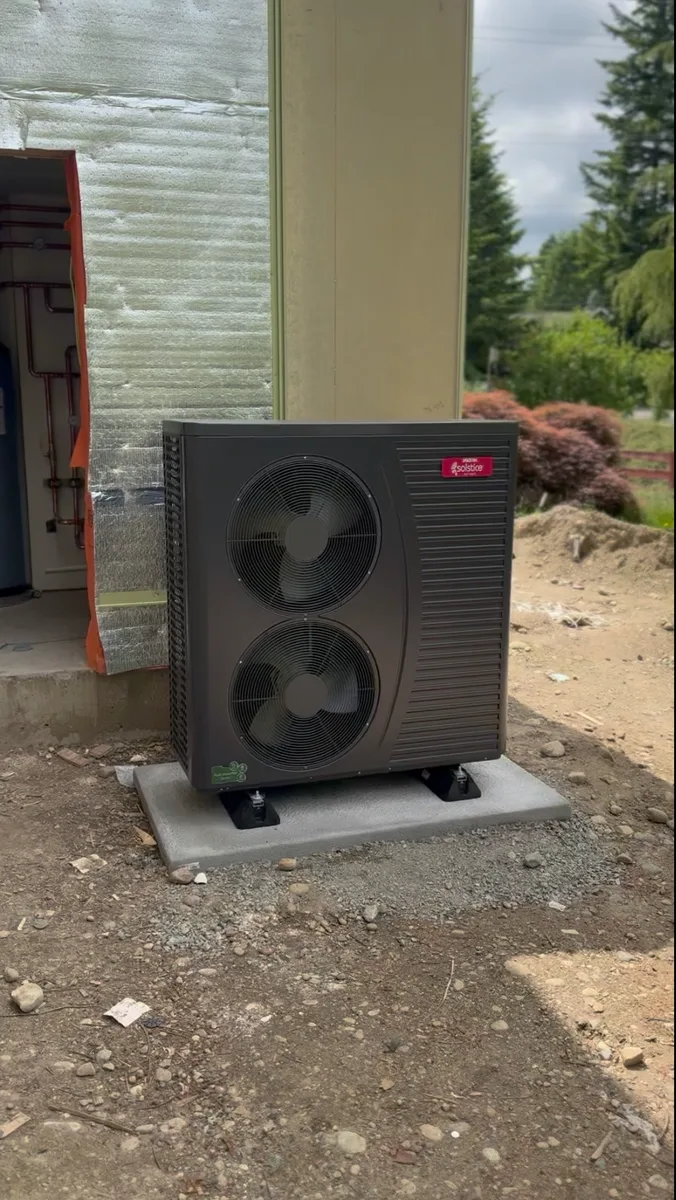
A straight replacement quote covers the equipment and the work — old unit out and hauled away, the new one set on a level pad with proper clearances and vibration isolation, the indoor side connected to your existing ductwork with the transitions sealed, wiring and controls reconnected, and the system started, tested and verified before I leave. Material and labour.
What sets the price is your house. A crawlspace you cannot stand up in. An electrical panel with no space left in it. Ductwork that was undersized when it went in and has been strangling every system since. A line set run three times longer than normal because the only place the outdoor unit can go is round the far side. Any one of those moves the number, and I would much rather tell you at your kitchen table than discover it on day two.
So there is no starting-at figure that quietly doubles. I look at the house, I write the number, and the number is the number. If you want options you get good, better and best in writing, and I will tell you what the extra money actually buys — which on some jobs is nothing worth having.
There is a 5% discount for active military, veterans and first responders, and financing is available.
Will a heat pump actually keep an Everett house warm?
Yes. The equipment I install is cold-climate inverter equipment, rated to keep producing heat into negative temperatures. Everett does not get there.
The doubt is fair, because it used to be true. Heat pumps from twenty years ago shed most of their output as the outdoor temperature dropped, which is why so many Puget Sound houses ended up with electric strip heat bolted on behind them, and why a lot of people remember a heat pump as the thing that ran all night and never really warmed the house.
Inverter equipment changed that. The compressor varies its speed instead of banging on and off, so it holds capacity much further down the temperature range and spends most of its life running slowly. Running slowly is what makes it quiet. It is also what holds the house at one temperature instead of swinging four degrees either side of the setpoint the way a single-stage furnace does.
Everett's problem was never extreme cold anyway. It is the length of the season — a long, wet, forty-degree winter where the heat is on for months. That is the exact condition a heat pump is best at and a furnace is worst at, because a furnace only knows full blast and off.
One thing worth asking when you are comparing quotes: get the rated heating capacity at 17°F and at 5°F. It is printed on the manufacturer's data sheet for whatever they are proposing. A contractor who will not show it to you has told you something useful.
Heat pump, furnace, or both — what I'd put in your house
There are three honest answers and they depend on the house, not on what I would rather sell.
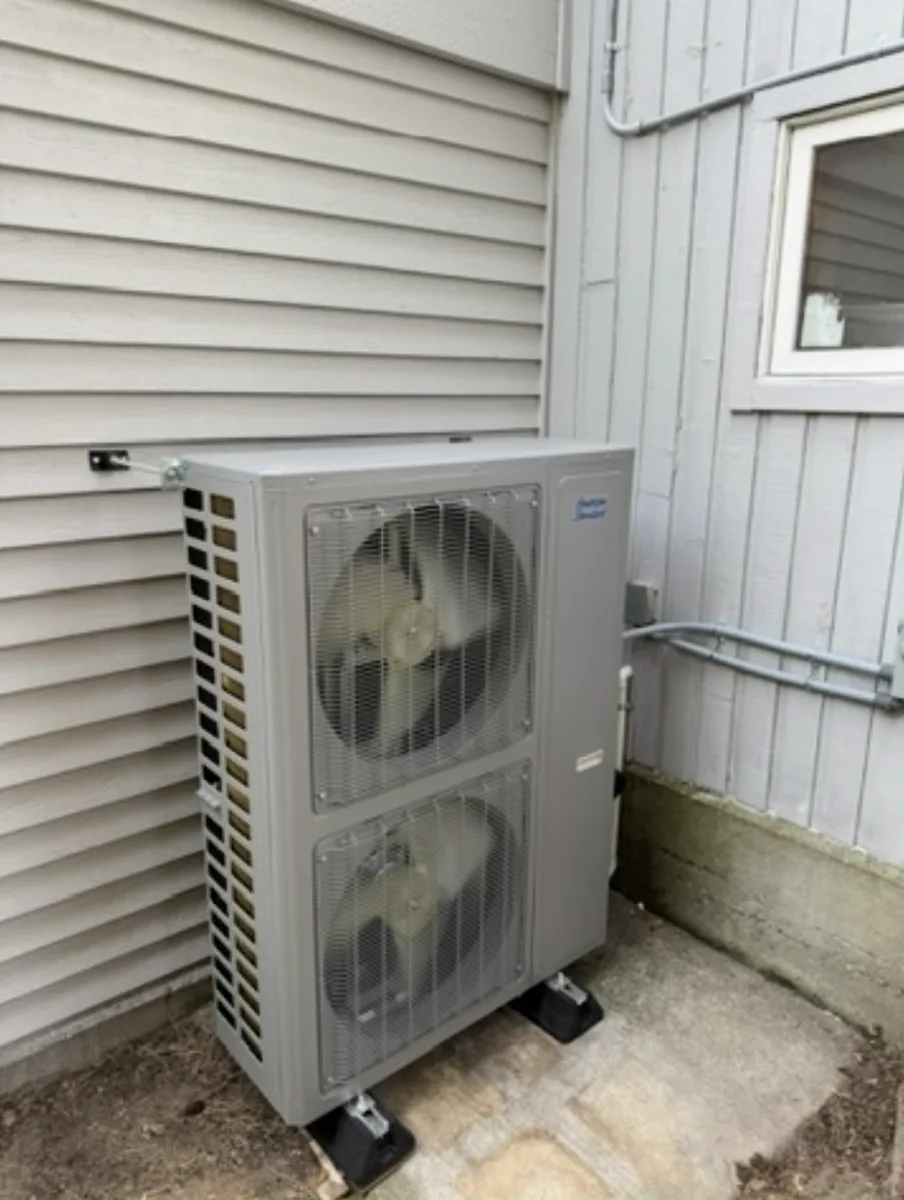
A heat pump on its own. If the ductwork is sound and the electrical panel has capacity, this is usually the right call. One unit outside, one inside, heating and cooling out of the same system, and gas stops being part of your heating bill.
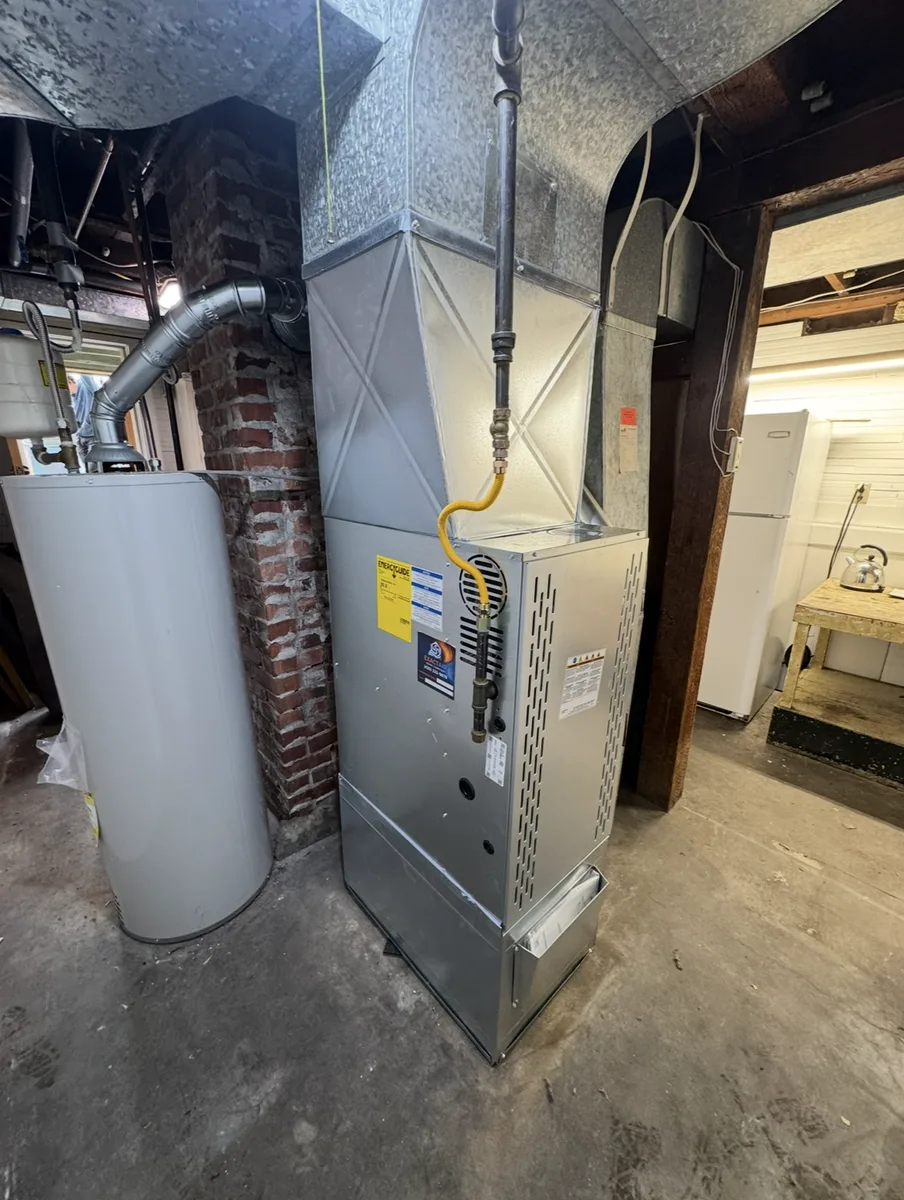
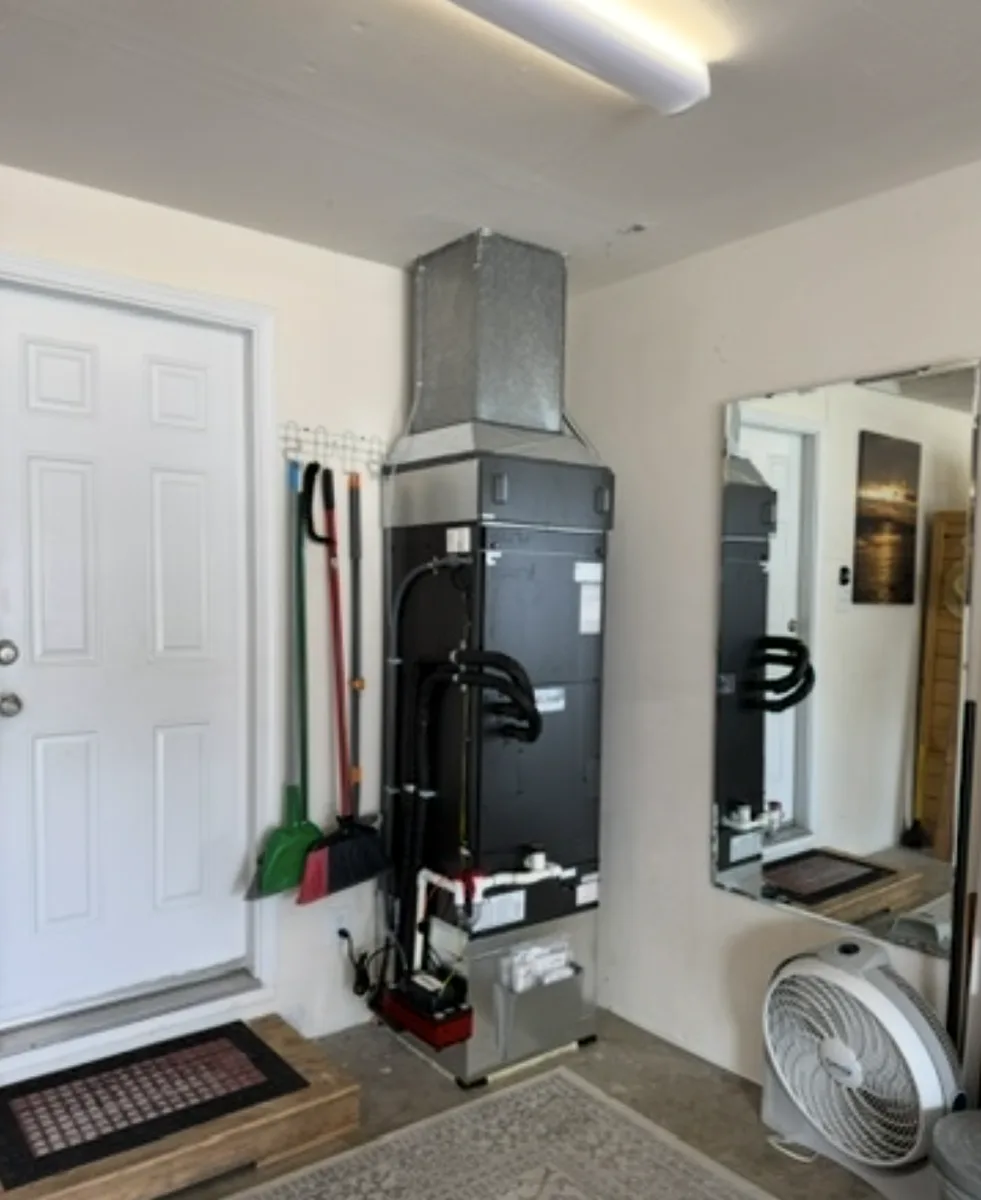
A heat pump and a gas furnace together — dual fuel. The heat pump does the everyday work and the furnace takes the coldest handful of days a year. It costs more up front because you are buying two pieces of equipment. I have built exactly this in Everett: heat pump, gas furnace, new coil, filter cabinet, and a return-air addition, because the house could not breathe properly through what it had and no amount of new equipment fixes that on its own.
A furnace on its own. Sometimes that is the answer and I will say so. If a furnace has died in November, or you are not planning to be in the house long, or the panel cannot carry a heat pump without a service upgrade you do not want to pay for — a straight furnace swap is the honest recommendation, and it is a lot cheaper.
If you are leaning furnace but you are not sure, there is a middle move most people have never been offered: put the heat-pump-ready coil in at the same time as the furnace. The indoor half is then already done, and whenever you decide to add the outdoor unit it is a smaller, cheaper job than doing the whole thing later.
And there is a fourth answer that costs you nothing: the system you have has another season in it. I will tell you that too. I would rather come and look at it again next August than sell you something you did not need this week.
When ductless is the better answer
A lot of Everett houses have no ductwork at all. The early-1900s places in Northwest Everett and around Rucker Hill were mostly not built with it, and adding ducts to a finished house means dropping ceilings, losing closets, and paying for carpentry before you have paid for any heat.
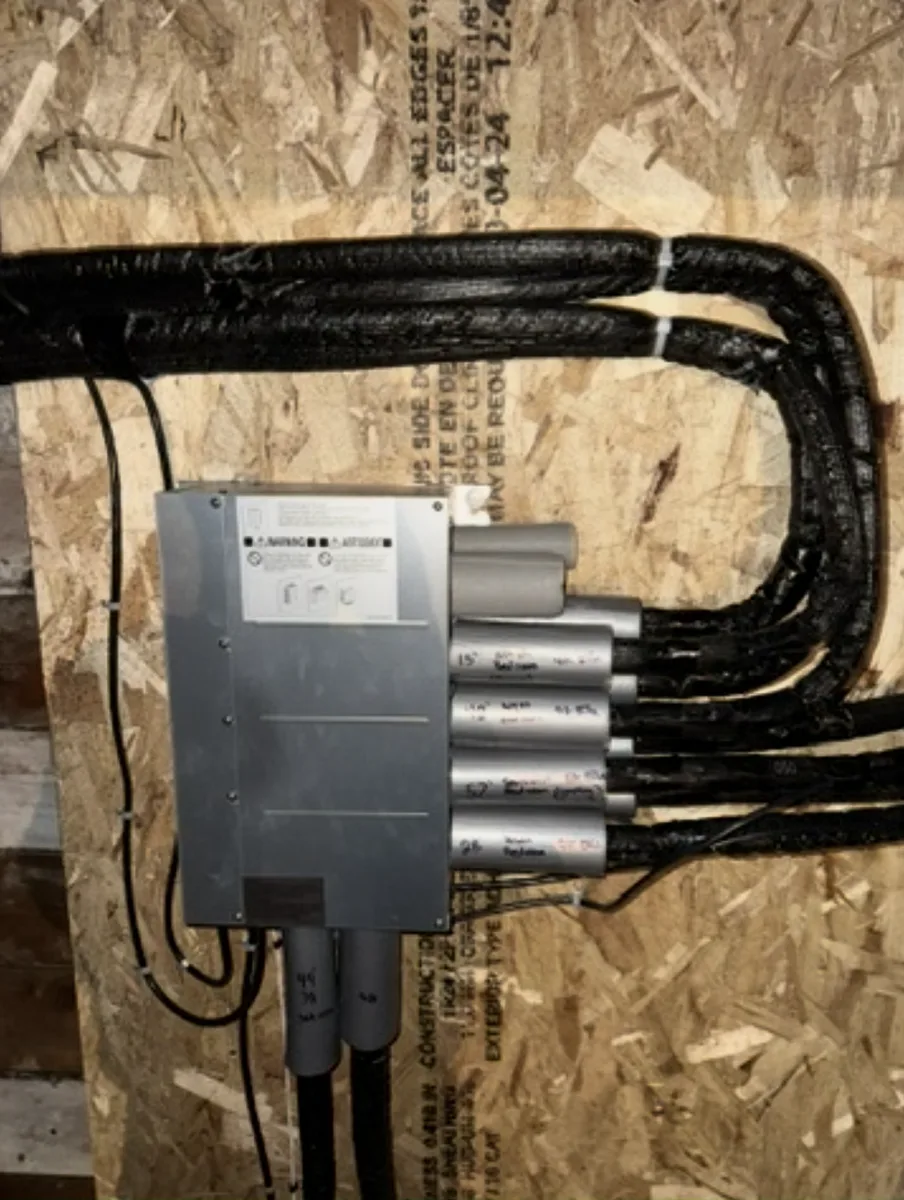
A ductless mini-split is a heat pump too. Same outdoor unit, same inverter compressor, same heating and cooling. The only difference is that it feeds slim indoor heads through a line set about three inches across instead of feeding ducts. One head for the bonus room over the garage that has never been the right temperature. Several heads on one outdoor unit for a whole house that has never had central anything.
If the house already has good ducts, ducted is normally the better system — it is out of sight, it filters everything through one filter, and it costs less per square foot of house. If the ducts are bad, or there are none, ductless wins. If someone recommends ductless without looking in your crawlspace, they have not answered the question, they have just quoted the thing they had in the van.
What the install actually involves
Most jobs run two to four days. Here is what those days are:
- Before anything — the site visit
- I measure the house and run a load calculation. Not square footage off the listing. I look at the panel, the crawlspace, the ducts, where the outdoor unit can physically go, and how the line set gets there without running across the front of your house.
- Day one — the old system out
- Old equipment removed, refrigerant recovered properly rather than vented, and the space prepped. On most jobs this is also when the sheet-metal transitions get fabricated to fit what is actually there, because what is actually there is never what the catalogue drawing shows.
- Day one to two — the new system in
- Outdoor unit set on a level pad with proper clearances and vibration isolation. Indoor unit set and connected to the ductwork with the transitions sealed. Line set run, condensate routed somewhere that makes sense and will still make sense in ten years, and a weatherproof disconnect mounted within sight of the outdoor unit, sized and grounded to code.
- Day two to three — vacuum and charge
- The refrigerant circuit is pulled down to a deep vacuum and charged to specification. This is the step that decides whether the system runs for twenty years or fails in its third summer.
- Last — commissioning and the walk-through
- System run, airflow and charge verified, thermostat configured for your specific equipment, and then I show you how to actually use it. Most people never touch half of what they paid for because nobody ever sat down and explained it.
The part that decides whether the system lasts is the vacuum and the charge, and it is the one nobody watching from the kitchen can evaluate. That is where a refrigeration journeyman's licence stops being a line on a website.
Permits, and why I pull my own
I hold a general contractor's licence as well as a refrigeration journeyman's licence, which means I pull the permit myself instead of subbing it out or quietly leaving it off the quote. A mechanical permit is obtained before the work starts, the work is done to code and to the manufacturer's requirements, and it goes through the required inspections and final approval.
I pull the permit myself, and it is written into your quote up front. It is a real cost, not a surprise that appears at the end.
Why it matters more than it sounds: an unpermitted install is the thing that surfaces when you sell the house, and unpermitted electrical work is the thing your insurer asks about after a fire. It also means somebody other than me looks at what I did, which is the point.
Rebates and tax credits — what I'll tell you, and what I won't
I am not putting a rebate figure on this page.
Utility programmes and tax credits change, they have eligibility rules that turn on your exact address and on how your house is heated today, and a number I type in August is worth nothing to you in February. A rebate figure printed on a webpage is only ever as good as the day it was written, and the homeowner is the one who finds that out at the end.
What I will do instead is tell you at the site visit what actually applies to your address and what it is worth — including when the answer is nothing — and then you should go and verify it yourself before you plan around it. That is a better use of your money than trusting a webpage, mine included.
The cooling half nobody asks about
Everyone in Everett buys a heat pump for the heat. Then July arrives.
A heat pump is an air conditioner that also runs backwards. There is no separate cooling equipment to buy, no second outdoor unit, no extra install. For most of the houses I work in, the heat pump is the first air conditioning that house has ever had — which is why the people who bought one for the winter are the ones telling their neighbours about it in the summer.
If you are replacing a furnace and you do not want a heat pump yet, the coil add-on gets the indoor half done now and leaves you ready for an outdoor unit whenever you decide. That is a smaller decision than it looks, and it is the one I would make in a house with a healthy furnace and a bad August.
If the heat has already gone
A fair number of people reach a page about heat pump installation because something has already failed, and what they actually need to know is whether this is a repair or the start of a much larger conversation.
If the house is cold right now, make the call first and read afterwards. I answer my own phone from 7am to 8pm, seven days a week, and Everett is where I am based, so this is the shortest run on my list. I am not going to print a response window on a webpage — call and I will tell you honestly when I can actually be there.
A no-heat call does not have to end in a replacement either. Rich St. Thomas, 24 May 2026, quoted exactly as it was written: “Tested everything and then gave me not only the diagnosis but gave me 4 separate options on what I can do from replacing bad parts in old furnace all the way to upgrading to a new furnace and heat pump.” Four options, including the cheap one.
Everett jobs I can show you
Two Everett jobs on this site, both real, both photographed.
A whole-home dual-fuel system — heat pump, gas furnace, new coil, filter cabinet, and a return-air addition, because the original return could not move the air the new equipment needed. That last part is the bit most quotes leave out and most homeowners never hear about until the new system underperforms.
A gas fireplace on a remodel — gas line and venting set exactly where the stone mason's finished surround needed them, so nothing had to come back off afterwards. Half of remodel work is not making the other trades redo theirs.
Who you are actually hiring
Rylan Utter. About six years in the trade, and ExactAir has been mine since November 2024.
I hold a general contractor's licence and a refrigeration journeyman's licence. I am also SpacePak certified for small-duct high-velocity systems — which I only do in new construction, never retrofits, and as far as I know I am the only one from here through Seattle who holds it.
I am open 7am to 8pm, seven days a week, and the number on this page is my cell. When you call at 7:40 on a Sunday evening you get me, not an answering service taking a message for Monday.
Every review on my Google profile is a five-star review. I would like to keep it that way, which is a better guarantee of how your house gets treated than anything else I could write here.
Common questions
How long does a heat pump installation take? Two to four days on most houses. Zone count and how the building is put together decide it, not the size of the equipment.
Do I need new ductwork? Sometimes. Undersized or leaky ducts will throttle a new system no matter what you paid for it. I would rather fix that than sell you equipment that cannot perform, and I will tell you which one you are looking at after I have been in the crawlspace.
Will my electrical panel handle it? That is one of the first things I check. If it will not, you hear about it before you get a price, not after you have signed.
Can I keep my gas furnace? Yes. That is a dual-fuel system and it is a good answer for a lot of Everett houses.
Is it noisy? An inverter system spends most of its life at low speed. Where the outdoor unit gets placed matters more than which badge is on it.
Do you do the work yourself? Yes. Every time.
What if the answer is that I don't need a new system? Then that is what I will tell you, and it costs you nothing.
HVAC services & nearby areas
Our services in Everett
Ready to upgrade your home comfort in Everett?
Honest pricing, straight answers, and no high-pressure sales. Get your free quote from Rylan, the owner — the person who quotes your job is the person who installs it — plus a 5% discount for military, veterans & first responders.